
Insulating Weehawken: From the Boulevard East Bluff to the Port Imperial Waterfront
Two Towns in One: Cliff-Top Pre-War and Riverfront New Build
Few municipalities in New Jersey split as cleanly into two building stocks as Weehawken does. The bluff above the Palisades, running along Boulevard East and the side streets that feed it, holds dense pre-war housing that watches Manhattan across the Hudson from one of the most exposed ridges in the state. Single-family Victorians, two-family stick built homes from the 1910s and 1920s, and small brick row houses line streets where wind shear off the river hits the western and northern walls hard from November through March. The original framing in much of that stock was built when air sealing was not a design priority, and it shows in the heating bills. At the base of the cliff, Port Imperial and the surrounding waterfront have produced a different building inventory entirely. Mid-rise and high-rise condos, townhouse rows, and amenity buildings have gone up steadily since the late 1990s along the Hudson shoreline. Many of those buildings have hit the 15 to 25 year mark, which is exactly when envelope deficiencies start showing up in top floor cooling loads, garage level moisture intrusion, and party wall sound transfer between attached units. Spray foam scopes here have to flex between both worlds within the same week.
Wind, Water, and the Palisades Effect on Building Envelopes
The Palisades cliff face changes the calculation for every envelope decision made in this township. On the bluff top, properties along Boulevard East and adjacent streets sit in a wind exposure regime that pulls warm air out of unsealed rim joists at a rate that surprises homeowners who moved up from quieter inland streets. Original construction in that stock left band joists, attic floor plates, and chimney chases open to outside air, and stack effect in a three story Boulevard East house can run faster than the same configuration in a sheltered suburb. Down at the waterfront, the conditions invert. Port Imperial and the Hudson shoreline carry constant river humidity, summer radiant load off the water, and a flood elevation reality that anchors every basement and garage level assembly choice. Closed cell foam handles the moisture and the limited but real FEMA flood overlay along the waterfront. Open cell foam handles the bluff top party wall and unvented attic scopes where vapor permeability is welcome. Owners in each half of the township face different problems, and the foam selection has to follow. Cooling season in the Hudson cliff face also pushes harder than the same calendar dates produce inland, since the river reflects radiant load back onto west and south facing walls through the summer afternoon hours.
Boulevard East Pre-War Envelope Sealing
The housing stock along Boulevard East and the streets feeding it carries some of the most exposed building envelopes in Hudson County. Pre-war single family and two family homes face the Hudson from a ridge that catches every northwest wind off the river, and the original framing was rarely detailed for air sealing. Rim joists in those basements often leak air through gaps between joist ends and the brick or stone foundation pocket, attic floor plates run continuous to outside air, and chimney chases drag conditioned air up and out through stack effect that runs harder here than on inland streets. Closed cell spray foam in the rim joist and at the attic floor plate addresses both problems at once. The foam densifies the band joist cavity, fills every irregular gap a hundred year old assembly produces, and adds a small amount of structural lift to original sill plates that have settled over decades. Attic floor plate foam stops the stack effect path that loses the most heat per square foot in this housing type. Most Boulevard East rim joist projects finish in one to two working days, and the air sealing improvement shows up in heating bills by the first cold snap. We document every cavity with photographs and pair the work with NJ Clean Energy Program rebate filings.
Port Imperial Condo and Townhouse Work
Port Imperial and the surrounding waterfront have produced a steady run of condo towers and townhouse rows since the late 1990s, and many of those buildings are now in the window where envelope deficiencies start surfacing. Top floor units catch the full Hudson sun and produce summer cooling loads the original HVAC was not sized to handle once attic insulation settles or thins. Garage level basements and ground floor parking podiums see seepage and condensation issues that compound as building seals age. Party walls between attached townhouse units transfer sound that buyers did not notice on a sunny Saturday walkthrough. Spray foam scopes in this housing typically run as condo association projects, which means board approval, common area protection protocols, and reserve study ready documentation at close. Closed cell foam handles roof deck retrofits where top floor cooling is the complaint, and party wall foam between attached townhouse units handles the sound transfer that is most owners' second priority once they buy in. Building wide projects schedule around tenant access windows, and we coordinate with property managers to keep amenity space and parking podium access functional throughout install. Documentation at project close covers material specs, R values achieved, warranty terms, and any rebates filed, so the board carries a defensible record into the next reserve study cycle.
Bluff-Top Attic and Roof Deck Foam
Top floor units on Boulevard East and across the bluff carry summer cooling loads that mid floor and ground floor units never see. The radiant load through unconditioned attic and roof deck assemblies pushes top floor interior temperatures ten to fifteen degrees above the rest of the building during July and August, which is why the original cooling system never quite kept up in those units regardless of how many tons of equipment got installed. The problem is conducted heat, not capacity, and the fix happens at the envelope. Closed cell spray foam under the roof deck in a Boulevard East Victorian or stick built two family converts the attic into conditioned space and cuts the radiant load on the top floor cooling system by more than half. Open cell foam on a top floor ceiling works when the attic is staying vented and the budget priority is thermal control without conditioning the attic volume. Most Boulevard East attic and roof deck projects run two to four working days depending on access, and the comfort change in the top floor is immediate from the first hot afternoon after install. We sequence the work to keep the top floor occupied during install and finish before the next heating or cooling cycle hits.
Comprehensive Spray Foam Insulation Services in Hoboken
Tailored to Your Needs
Every Hoboken property has its own envelope story. Below are the ten spray foam insulation services we run across brownstones, condo buildings, mixed use construction, and flood zone basements throughout the Mile Square City and the surrounding Hudson County corridor.

FEMA approved closed cell foam for Hoboken brownstones, flood zone basements, and exterior masonry walls.
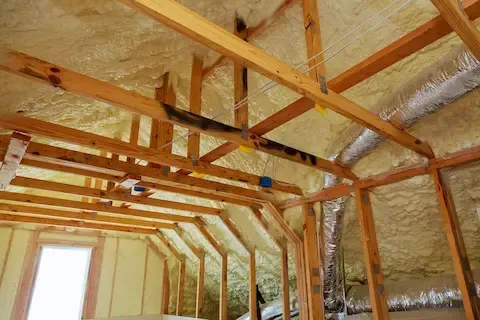
Open cell foam for Hoboken party walls, unvented attics, and condo soundproofing projects.
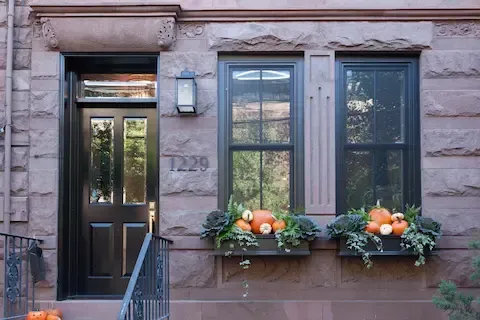
Whole brownstone envelope retrofits across Hoboken from rim joist to roof deck.

Coordinated spray foam projects for Hoboken condo associations and coop boards.
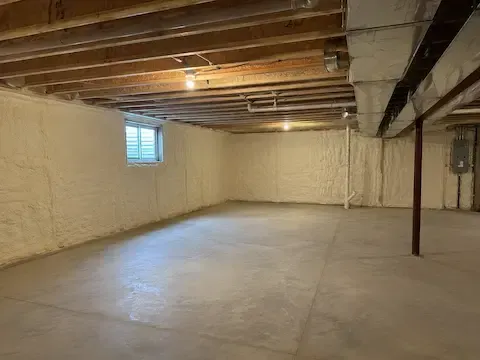
FEMA compliant closed cell basement encapsulation for Hoboken flood zone properties.

Roof deck and top floor ceiling spray foam projects across Hoboken brownstones.
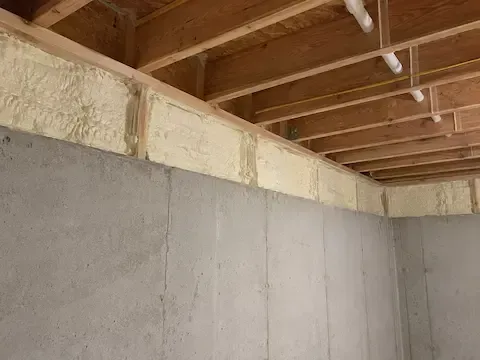
Closed cell rim joist sealing for pre 1900 Hoboken brownstone construction.
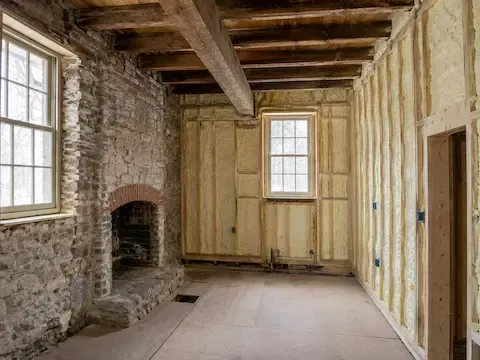
Historic district approved spray foam work for Hoboken's protected building stock.
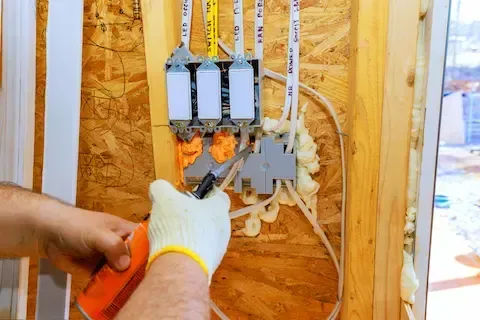
Commercial spray foam for Hoboken mixed use, retail, and small footprint commercial buildings.
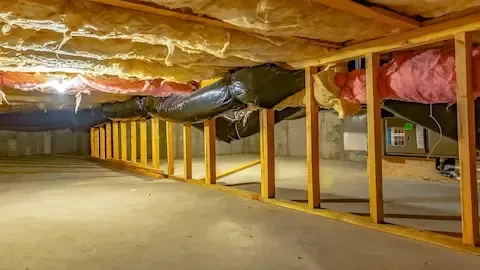
Closed cell crawl space encapsulation across Hoboken row houses and garden level voids.
Frequently Asked Questions
Spray Foam Insulation can be complex, and we’re here to provide answers to common questions. Here are some frequently asked questions from our clients.
Frequently Asked Questions about Spray Foam Insulation Hoboken
Does spray foam insulation work well in Hoboken brownstones?
Yes. Closed cell and open cell foam both fit Hoboken brownstone work, but the choice depends on the assembly. Rim joists, exterior masonry walls, and flood zone basements take closed cell. Party walls and unvented attics often work better with open cell. We walk the building with you before recommending a system.
How does Hoboken's historic district affect a spray foam project?
Most spray foam work happens inside the wall cavity and never touches the protected exterior facade, so historic district review is usually straightforward. Anything visible from the street, including new vents or any envelope alteration that changes the masonry, requires Hoboken Historic Preservation Commission review. We handle that paperwork.
Can spray foam help with Hoboken flood zone basements?
Closed cell spray foam is recognized by FEMA Technical Bulletin 2 as flood damage resistant material. In Hoboken's AE and VE zones we use closed cell foam in basement assemblies above and below the design flood elevation, paired with insurance ready documentation showing compliance.
What rebates are available for spray foam in Hoboken?
The NJ Clean Energy Program, PSEG Hudson County envelope rebates, the federal 25C tax credit, and the HOMES and HEAR rebate programs can all apply to a Hoboken spray foam project. We prepare the paperwork so the rebate stack actually reaches the owner instead of getting lost in filing.
Do you work with condo associations and coop boards in Hoboken?
Yes. Building wide condo and coop projects are a significant share of our work. We attend board meetings, coordinate unit access with multiple owners, protect common areas during install, and provide the documentation packages boards need for their records and reserve studies.
How long does a typical Hoboken spray foam project take?
A single brownstone basement or rim joist scope usually finishes in one to two days. A full brownstone envelope retrofit covering rim joist, party walls, and top floor ceiling runs three to five days. Building wide condo projects depend on unit count and access scheduling, typically two to four weeks.
Need Spray Foam Insulation?
What Our Satisfied Clients Have to Say About Hoboken Spray Foam Insulation
We pride ourselves on delivering great results and experiences for each client. Hear directly from home and business owners who’ve trusted us with their Spray Foam Insulation needs.

We hired for the rim joist and basement in our 1890s brownstone off Hudson Street. The crew handled the historic district paperwork and finished closed cell work in two days. Heating bills dropped that first winter and the basement finally stays dry through nor'easter season. Honest pricing and a clean job site every day.
Marisol K., Hoboken NJ
Our condo board approved for a building wide top floor ceiling project after they walked the board through every step. They coordinated unit access with eleven owners, finished on schedule, and the third floor units no longer cook in summer. The Climate Action rebate paperwork they prepared was flawless.
David R., Hoboken Condo Board President
After Sandy we rebuilt the basement of our row house in the AE flood zone and needed closed cell foam that meets FEMA flood damage resistant standards. explained Technical Bulletin 2, handled the spec, and got it done. Five years later the assembly still performs and our insurer was satisfied with the documentation.
Priya S., Hoboken Brownstone Owner
The Trusted Spray Foam Insulation Expert Near You
Ready to hear more about expert services at Hoboken Spray Foam Insulation?
Contact us today to receive a detailed, no-obligation quote.
Mon-Fri, 8am-5pm
Quick Links